Document 8 · Note
July 1935
Orlin
Albert Breyer's notes of July 1935, in German and partly in Russian. In 1935 Huta Trąbczyńska has 18 farmers and 217 Morgen, Orlin in July 1935 85 farmers. For Orliny he notes 152 cows and 343 sheep, in 1879 52 cartloads of fuel for the whole village, in 1880 300 Morgen 97 rods, and names from a forestry plan, among them Biskupice, Szetlew and Grzebień. In Józefów Becker, Wegert and Jesswein were among the first farmers. With this, notes on the old houses, gable to the street, on the hymn books, the Züllichau one among them, and on dress: the women wear aprons right round the body, and the bonnets disappeared 30 years ago. The old people spoke some Low German; the people of Orlin call those of Białobłoty "the stupid Kashubians"; a Protestant landowner, Riedel, in Wielki Bór gave Mr Schmidt a hymn book. Under the heading "Holędry Orliny Biskupicki", on the German settlers, naming Grodziec, Łazińsk, Białobłoty and Obory: theft of wood and potatoes, mostly from poverty, less in Łazińsk; wild marriages and illegitimate children; many marry into Białobłoty; they get on well with the Poles, the Poles speak good German, and there is no tendency to assimilation; the Volksverband works through the "Volksfreund" and the calendar. In Orlin there are two preachers and, for two years, Pentecostalists and Baptists. With them customs, and the young, mostly girls, going to the Poznań region. The notes break off in mid-sentence.
Albert Breyers Notizen vom Juli 1935, deutsch und zum Teil russisch. Huta Trąbczyńska hat 1935 18 Wirte und 217 Morgen, Orlin im Juli 1935 85 Wirte. Für Orliny notiert er 152 Kühe und 343 Schafe, 1879 für das ganze Dorf 52 Fuhren Brennmaterial, 1880 300 Morgen 97 Ruten, und Namen aus einem Forstwirtschaftsplan, darunter Biskupice, Szetlew und Grzebień. In Józefów waren Becker, Wegert und Jesswein unter den ersten Wirten. Dazu Notizen zu den alten Häusern, mit dem Giebel zur Straße, zu den Gesangbüchern, darunter dem Züllichauer, und zur Tracht: die Frauen tragen Schürzen rund um den Körper, die Hauben sind vor 30 Jahren verschwunden. Die Alten sprachen etwas Plattdeutsch; die Orliner schimpfen die Leute von Białobłoty „die dummen Kaschuben“; ein evangelischer Gutsbesitzer Riedel in Wielki Bór schenkte Herrn Schmidt ein Gesangbuch. Unter der Überschrift „Holędry Orliny Biskupicki“ über die deutschen Siedler, mit Grodziec, Łazińsk, Białobłoty und Obory: Diebstahl von Holz und Kartoffeln, meist aus Armut, in Łazińsk weniger; wilde Ehen und uneheliche Kinder; viele heiraten nach Białobłoty; mit den Polen kommen sie gut aus, die Polen sprechen gut Deutsch, Neigung zur Assimilation gibt es keine; der Volksverband wirkt durch den „Volksfreund“ und den Kalender. In Orlin gibt es zwei Prediger und seit zwei Jahren Pfingstler und Baptisten. Dazu Bräuche und der Zug der Jugend, meist Mädchen, ins Posensche. Die Notizen brechen mitten im Satz ab.
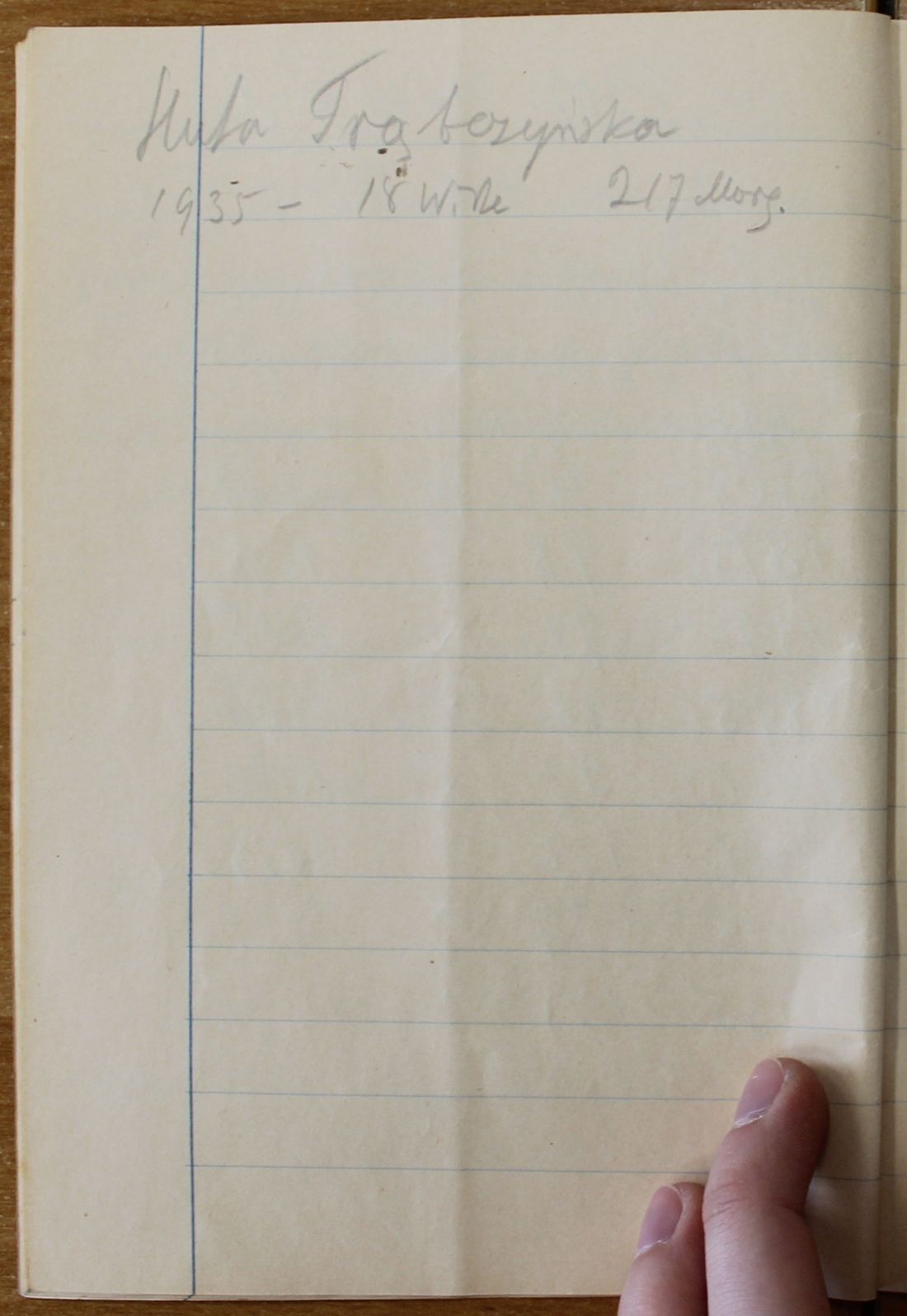
- Huta Trąbczyńska
- 1935 - 18 Wirte 217 Morg.
Huta Trąbczyńska 1935 - 18 Wirte 217 Morg.
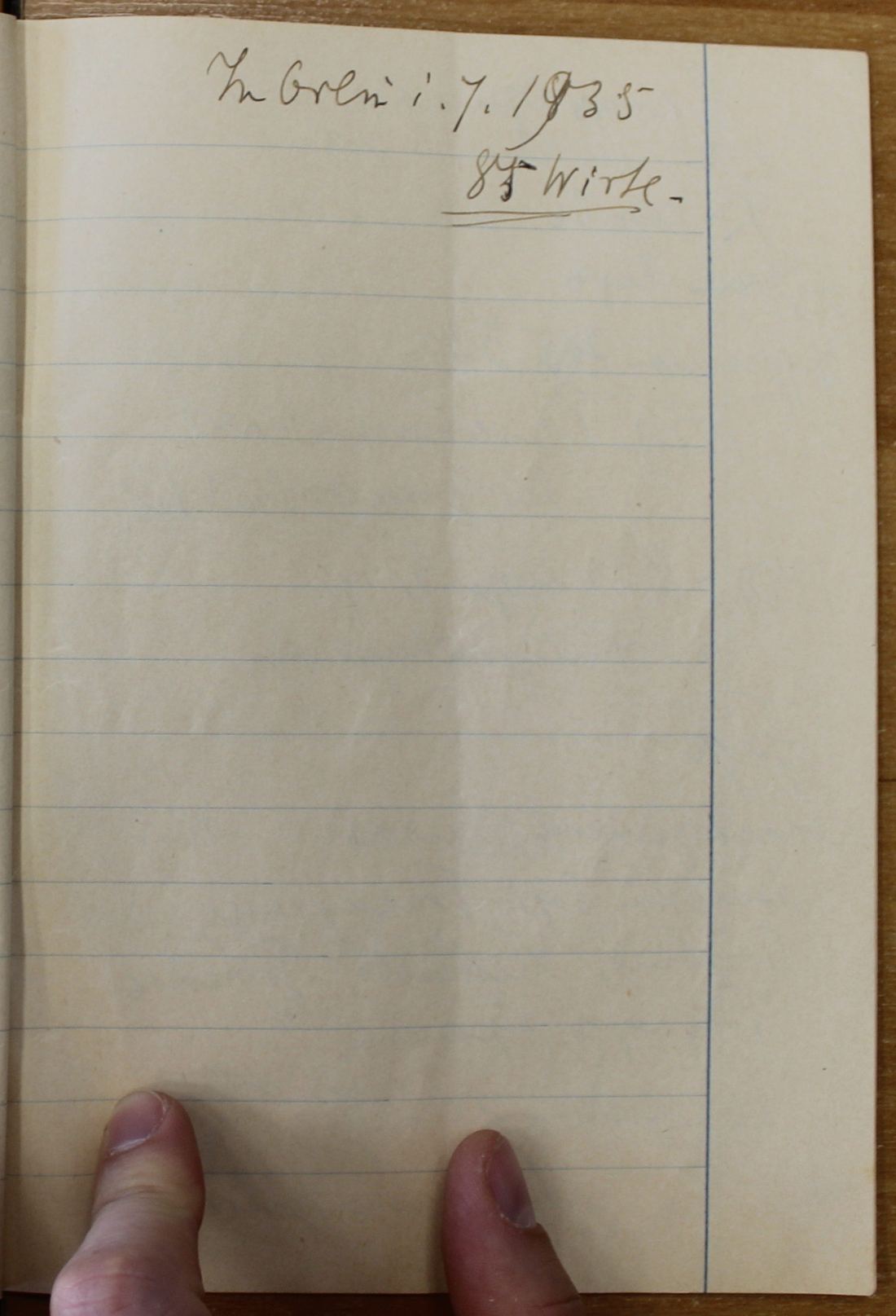
- In Orlin i. 7. 1935
- 85 Wirte.
In Orlin i. 7. 1935 85 Wirte.
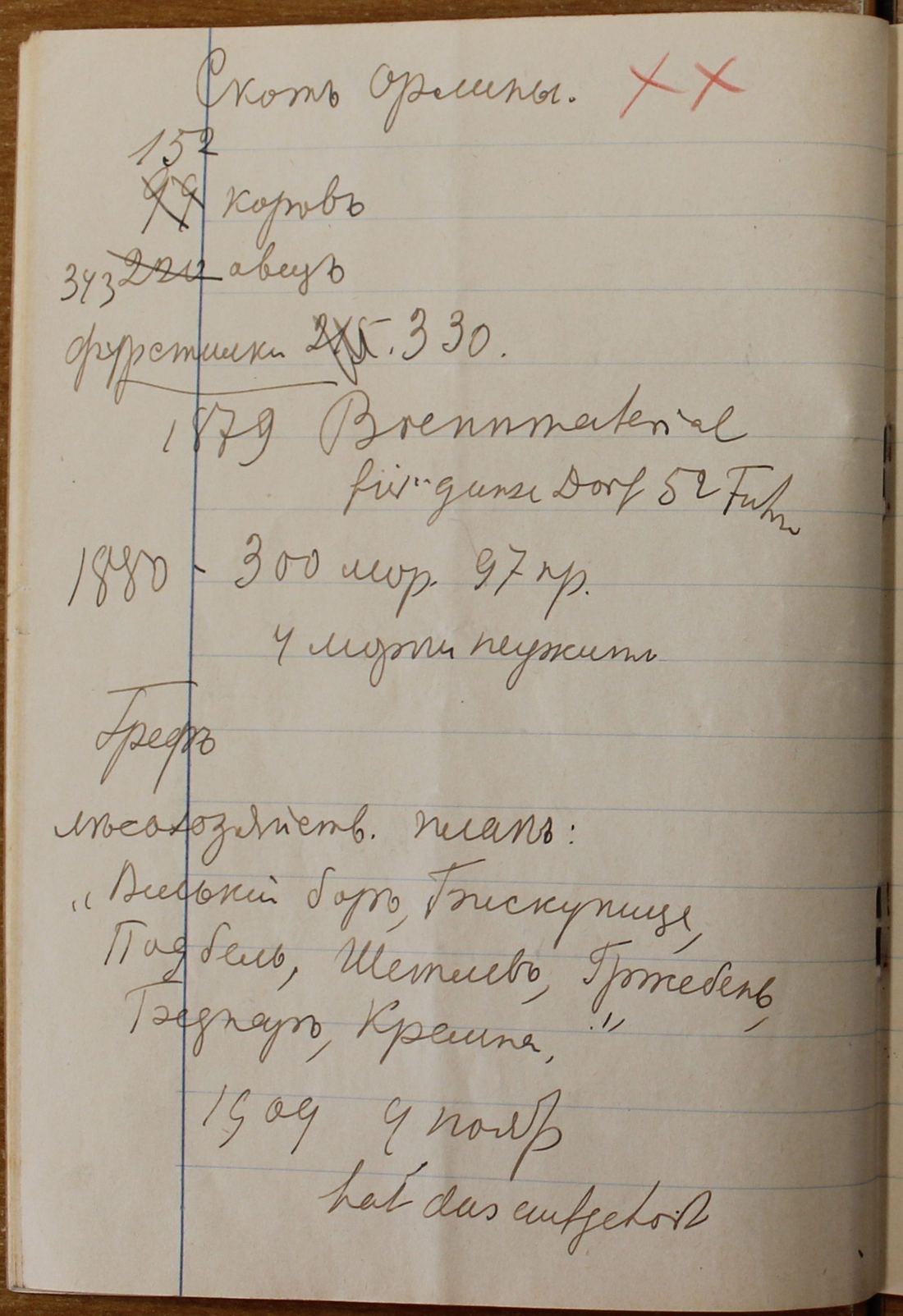
- Скотъ Орлины. ××
- 152 коровъ
- 343 овецъ
- фурштики 330.
- 1879 Brennmaterial
- für ganze Dorf 52 Fuhr
- 1880 - 300 мор. 97 пр.
- 4 морги неужит.
- [Гредъ?]
- лѣсохозяйств. планъ:
- „Велькiй боръ, Бискупице,
- Подбель, Шетлевъ, Гржебень,
- [Гедпаръ?], Крешня."
- 1909 9 Nov.
- hat das aufgehört
Скотъ Орлины. ×× 152 коровъ
343 овецъ фурштики 330. 1879 Brennmaterial für ganze Dorf 52 Fuhr 1880 - 300 мор. 97 пр. 4 морги неужит. [Гредъ?] лѣсохозяйств. планъ: „Велькiй боръ, Бискупице, Подбель, Шетлевъ, Гржебень, [Гедпаръ?], Крешня." 1909 9 Nov.
hat das aufgehört
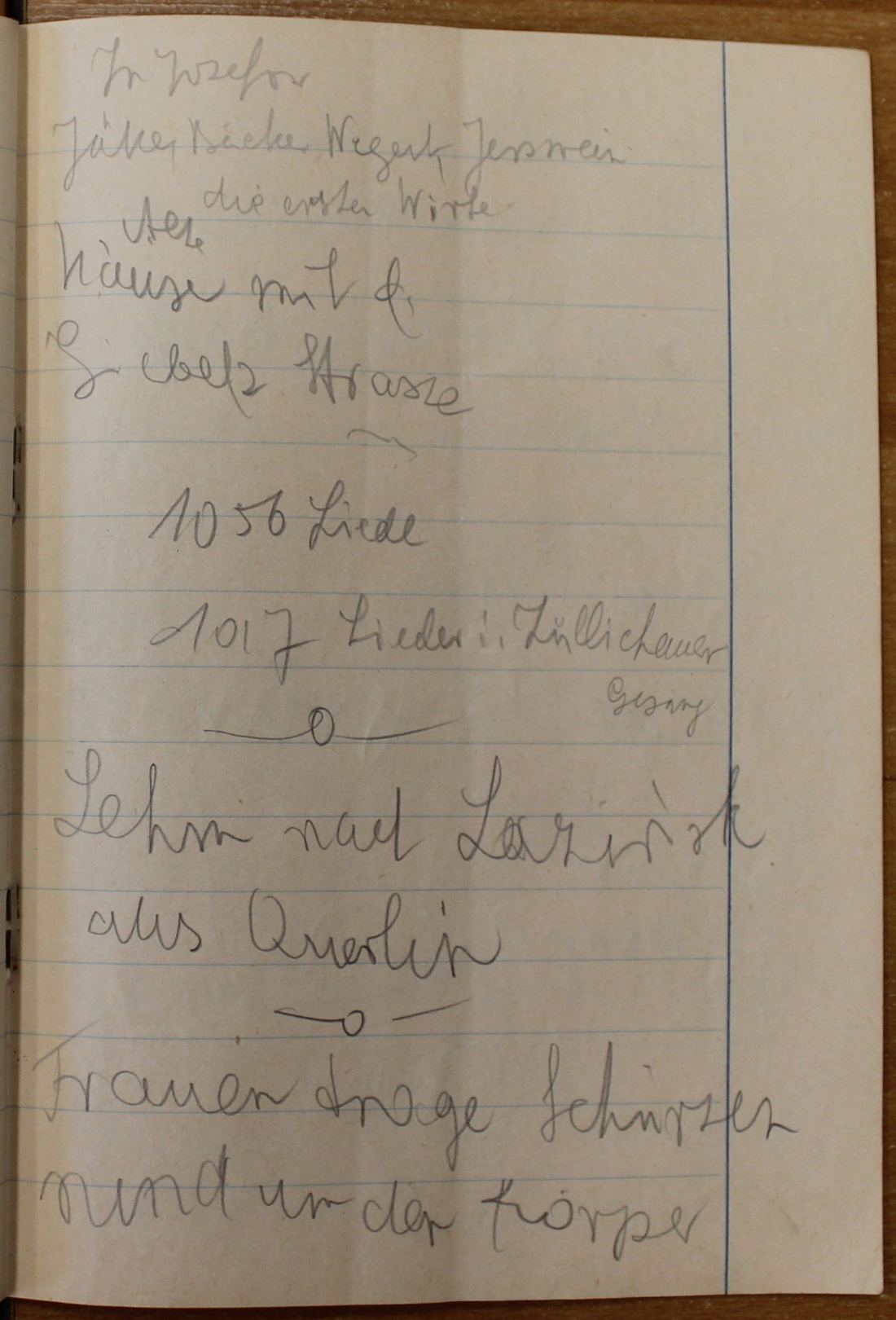
- In Józefów
- [Jäke?], Becker, Wegert, Jesswein
- die ersten Wirte.
- Alte Häuser mit d.
- Giebel z. Strasse
- 1056 Liede
- 1017 Lieder i. Züllichauer
- Gesang
- —o—
- Lehm nach Łazińsk
- aus Querlin
- —o—
- Frauen trage Schürzen
- rund um den Körper
In Józefów [Jäke?], Becker, Wegert, Jesswein die ersten Wirte. Alte Häuser mit d. Giebel z. Strasse 1,056 Liede 1,017 Lieder i. Züllichauer Gesang
—o— Lehm nach Łazińsk aus Querlin
—o— Frauen trage Schürzen rund um den Körper
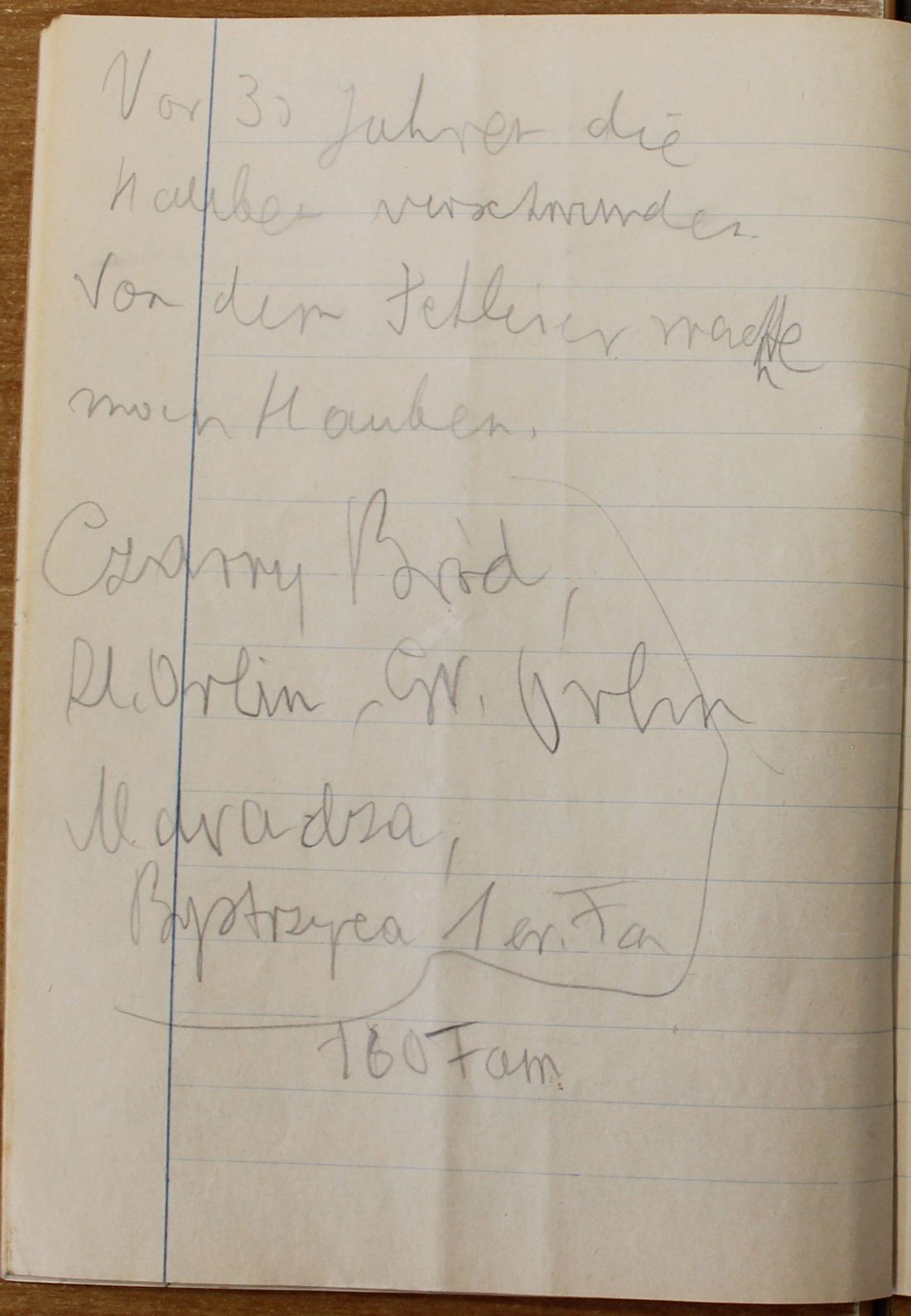
- Vor 30 Jahren die
- Hauben verschwunden.
- Von den […etli…?] machten
- man Hauben.
- Czarny Bród,
- Kl. Orlin, Gr. Orlin
- Maradza,
- Bystrzyca 1 ev. Fam
- 160 Fam.
Vor 30 Jahren die Hauben verschwunden. Von den […etli…?] machten man Hauben.
Czarny Bród, Kl. Orlin, Gr. Orlin Maradza, Bystrzyca 1 ev. Fam 160 Fam.
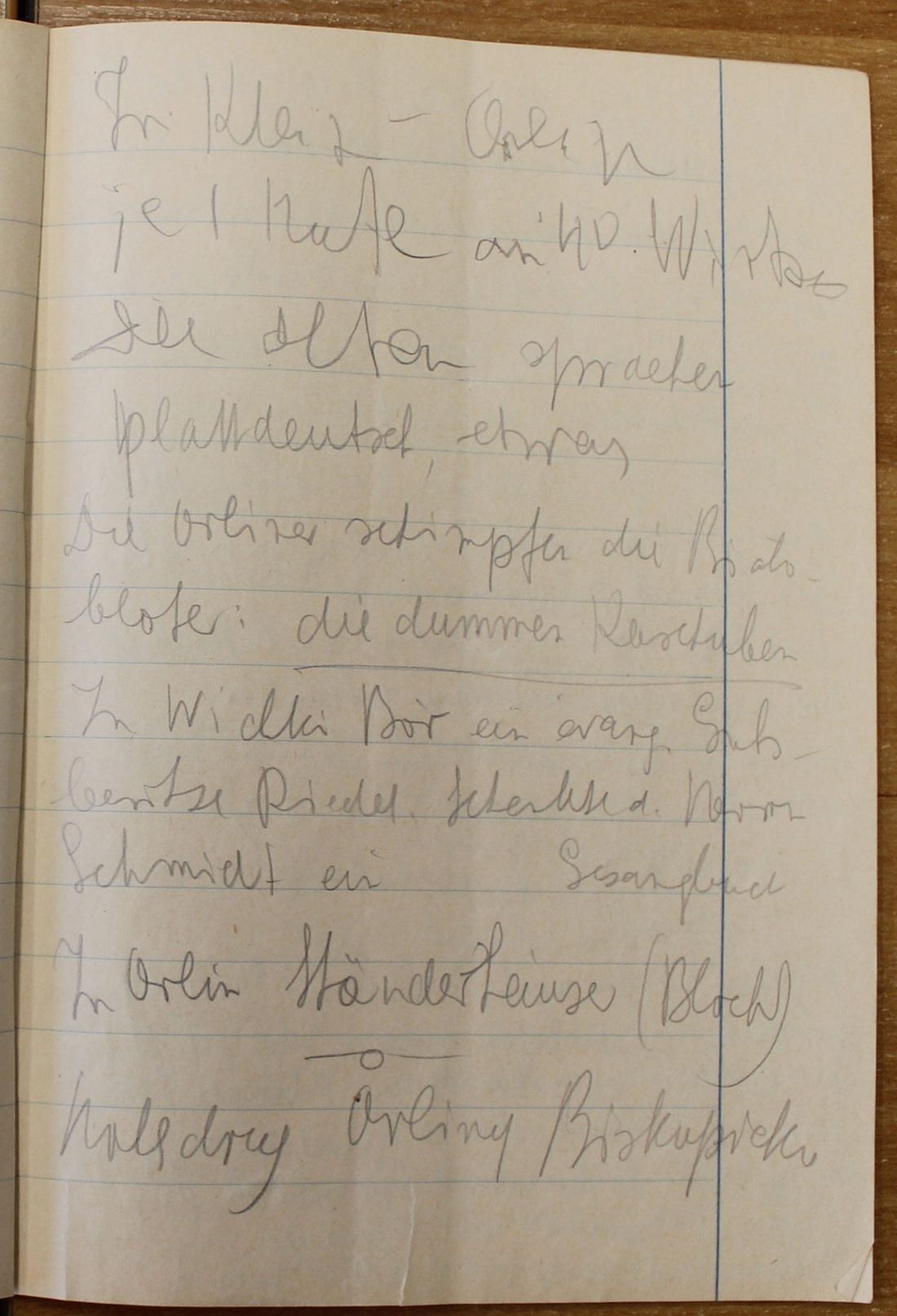
- In Klein - Orlin
- je 1 Hufe an 40 Wirte
- Die Alten sprachen
- plattdeutsch, etwas
- Die Orliner schimpfen die Biało-
- bloter: die dummen Kaschuben
- In Wielki Bór ein evang. Guts-
- besitzer Riedel. Schenkte d. Herrn
- Schmidt ein Gesangbuch
- In Orlin Ständerhäuse (Bloch)
- —o—
- Holędry Orliny Biskupicki
In Klein - Orlin je 1 Hufe an 40 Wirte Die Alten sprachen plattdeutsch, etwas Die Orliner schimpfen die Białobloter: die dummen Kaschuben In Wielki Bór ein evang. Gutsbesitzer Riedel. Schenkte d. Herrn Schmidt ein Gesangbuch In Orlin Ständerhäuse (Bloch) —o— Holędry Orliny Biskupicki
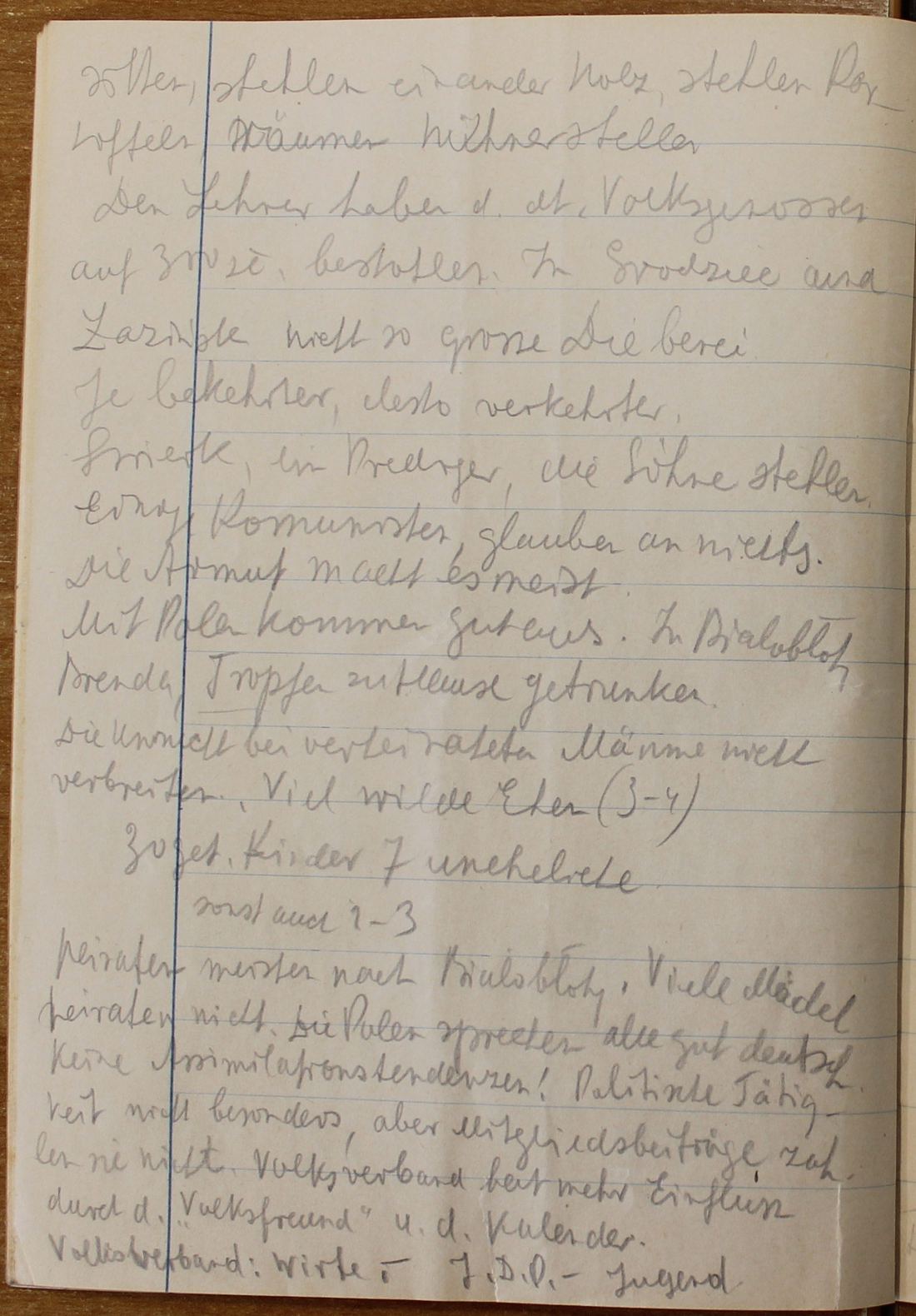
- [Solten?], stehlen einander Holz, stehlen Kar-
- toffeln, träumen Hühnerstehlen
- Den Lehrer haben d. dt. Volksgenossen
- auf [Zrost?], bestohlen. In Grodziec arm
- Łazińsk nicht so grosse Dieberei
- Je bekehrter, desto verkehrter.
- [Frierk?], ein Prediger, die Söhne stehlen.
- Evang. Kommunisten, glauben an nichts.
- Die Armut macht es meist.
- Mit Polen kommen gut aus. In Białoblot
- Brenda Tropfen zu Hause getrunken.
- Die Unmoral bei verheirateten Männer nicht
- verbreitet. Viel wilde Ehen (3-4)
- [Zoget.?] Kinder 7 uneheliche
- sonst auch 2-3
- Heiraten meisten nach Białobłoty. Viele Mädel
- heiraten nicht. Die Polen sprechen alle gut deutsch
- Keine Assimilationstendenzen! Politische Tätig-
- keit nicht besonders, aber Mitgliedsbeiträge zah-
- len sie nicht. Volksverband hat mehr Einfluss
- durch d. „Volksfreund" u. d. Kalender.
- Volksverband: Wirte - J.D.P. - Jugend
[Solten?], stehlen einander Holz, stehlen Kartoffeln, träumen Hühnerstehlen Den Lehrer haben d. dt. Volksgenossen auf [Zrost?], bestohlen. In Grodziec arm Łazińsk nicht so grosse Dieberei Je bekehrter, desto verkehrter. [Frierk?], ein Prediger, die Söhne stehlen. Evang. Kommunisten, glauben an nichts. Die Armut macht es meist.
Mit Polen kommen gut aus. In Białoblot Brenda Tropfen zu Hause getrunken. Die Unmoral bei verheirateten Männer nicht verbreitet. Viel wilde Ehen (3-4) [Zoget.?] Kinder 7 uneheliche sonst auch 2-3 Heiraten meisten nach Białobłoty. Viele Mädel heiraten nicht. Die Polen sprechen alle gut deutsch Keine Assimilationstendenzen! Politische Tätigkeit nicht besonders, aber Mitgliedsbeiträge zahlen sie nicht. Volksverband hat mehr Einfluss durch d. „Volksfreund" u. d. Kalender. Volksverband: Wirte - J.D.P. - Jugend
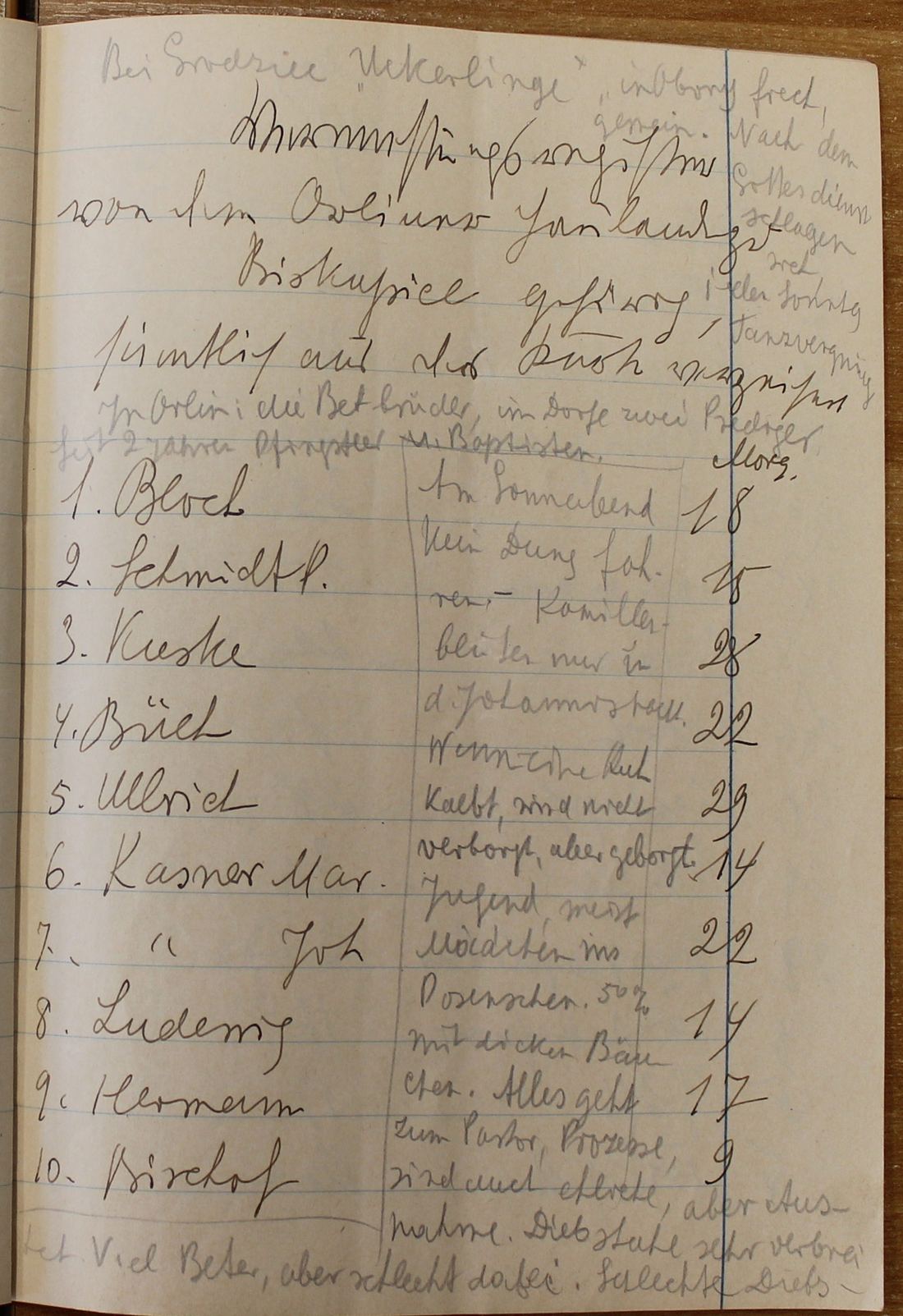
- Bei Grodziec „Ukerlinge" „in Obory frech, gemein.
- Nach dem Gottesdienst schlagen sich jeden Sonntag Tanzvergnügung
- In Orlin: die Betbrüder, im Dorfe zwei Prediger,
- seit 2 Jahren Pfingstler u. Baptisten.
- Am Sonnabend kein Dung fahren. - Kamillen-
- blüten nur in d. Johannisnacht.
- Wenn eine Kuh kalbt, wird nicht verborgt, aber geborgt.
- Jugend meist Mädchen ins Posenschen. 50%
- mit dicken Bäuchen. Alles geht zum Pastor, Prozesse
- sind auch etliche, aber Ausnahme. Diebstahl sehr verbrei-
- tet. Viel Beter, aber schlecht dabei. Schlechte Diebs-
Bei Grodziec „Ukerlinge" „in Obory frech, gemein. Nach dem Gottesdienst schlagen sich jeden Sonntag Tanzvergnügung In Orlin: die Betbrüder, im Dorfe zwei Prediger, seit 2 Jahren Pfingstler u. Baptisten. Am Sonnabend kein Dung fahren. - Kamillenblüten nur in d. Johannisnacht.
Wenn eine Kuh kalbt, wird nicht verborgt, aber geborgt. Jugend meist Mädchen ins Posenschen. 50% mit dicken Bäuchen. Alles geht zum Pastor, Prozesse sind auch etliche, aber Ausnahme. Diebstahl sehr verbreitet. Viel Beter, aber schlecht dabei. Schlechte Diebs-